
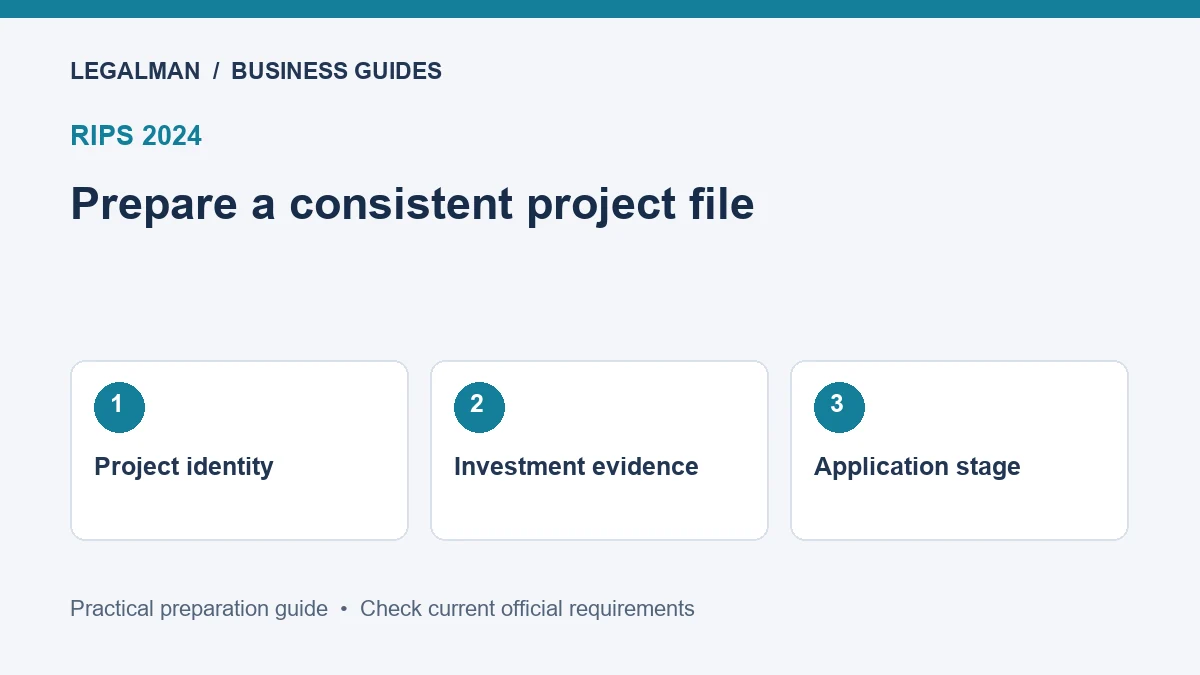
A RIPS application becomes difficult to review when the project summary says one thing and its attachments say another. Start by organising the RIPS 2024 documents required for the particular project and application stage. Your file should explain who is investing, where the unit is located and what evidence supports the figures. The planning steps below help you prepare that file; the current official requirements determine the final attachments.
Start with one project summary
Write a short summary containing the legal entity name, project location, proposed activity and current stage. Separate a new unit from an expansion or other project proposal. Keep contact details and the authorised representative consistent across the summary and supporting records.
Record the policy version being examined. An old RIPS 2022 article or another business’s entitlement does not establish what applies to a RIPS 2024 project. Use the official RajNivesh guidance as the starting point for the applicable route.
Group the evidence by purpose
Maintain separate folders for entity and authority records, land or premises information, investment evidence, financing information and operational milestones. These are planning categories, not a declaration that every item is mandatory in every case.
For each figure in the project summary, record its source. A machinery quotation, payment record and capitalisation entry describe different stages. Label estimates separately from expenditure already incurred so that a reviewer can follow the project’s status.
Build a date and consistency register
Create a register with the document name, issuer, date, entity name, project address and any issue to resolve. Check mismatches before uploading documents. A useful register also records who must supply the missing information.
Keep dated versions of the application and attachments. If a figure changes, update the summary and relevant schedules together. Preserve the original evidence instead of overwriting it with a revised estimate.
Check the stage before choosing a claim
Application preparation and a later incentive claim are different tasks. Ask which stage is being handled and what event triggers the next step. Do not assume that an initial registration or acknowledgement confirms an entitlement.
Before committing project finances on the assumption of a subsidy, review eligibility, relevant exclusions and the current procedural guidance. Obtain a project-specific assessment where the activity or investment treatment is uncertain.
A simple way to spot a mismatch
Suppose a quotation names the parent business, while the project summary names a newly formed company. Flag the difference before using the quotation as evidence for that company’s project. The next step is to establish who is actually purchasing the asset and what record supports that position—not to edit the name on the quotation yourself.
Frequently asked questions
Is this a complete list of mandatory RIPS documents?
No. It is an organisation framework. The current notification, sector, project stage and official application determine the required attachments.
Can an investor based outside Rajasthan use this planning checklist?
Yes, for organising a proposed Rajasthan project. The investor’s home city does not itself establish project eligibility.
Does submitting documents guarantee a subsidy?
No. The competent authority assesses the application and any later claim under the applicable conditions.
Plan your next step
For a review of your own records and the assistance needed, explore our RIPS consultancy service. Share the relevant records so that missing information can be identified before work begins.
Official reference: Government guidance and current application information. This article is a practical preparation guide, not an exhaustive statutory checklist. Requirements depend on the project, transaction and rules applicable when action is taken.