
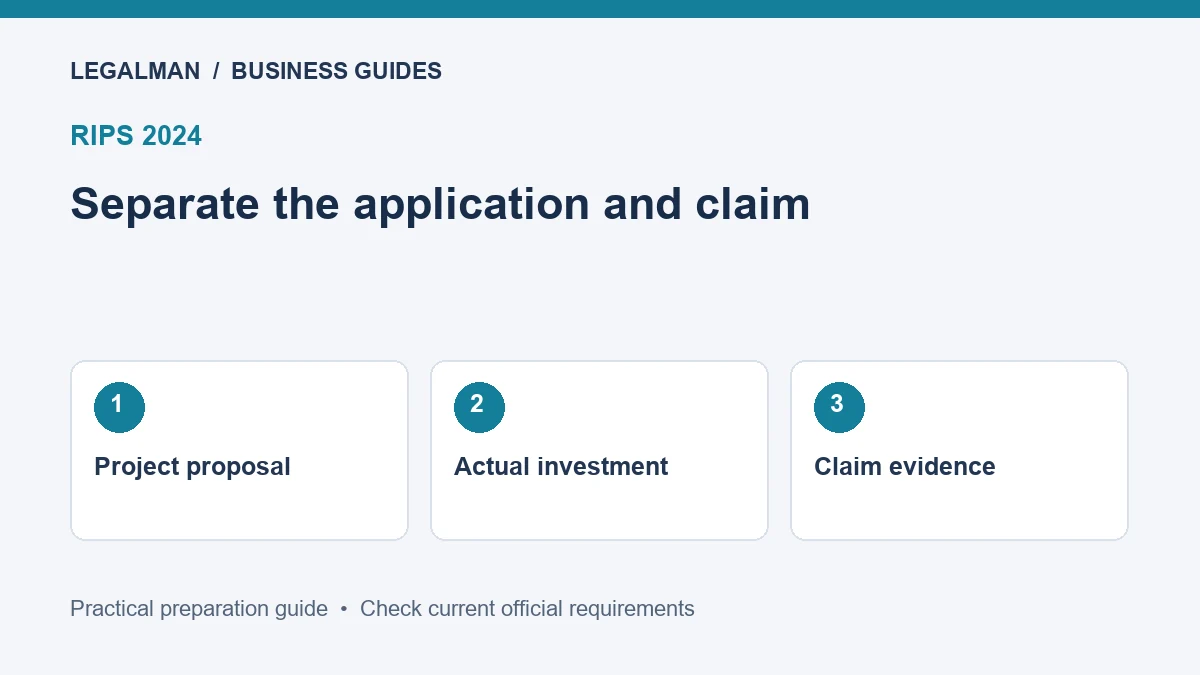
The RIPS 2024 application process is easier to manage when the project application and any later incentive claim have separate evidence trails. They may relate to the same investment, but they need not answer the same questions or rely on the same stage of evidence. Keep the purpose of each submission explicit.
Record what is being submitted
Start a register with the submission type, project identity, relevant official guidance and the outcome being requested. Describe the current project stage without assuming that a portal acknowledgement is an approval.
Use the current RajNivesh guidance to identify the route for the project. If you are working from a historical sanction or earlier policy, record that fact instead of mixing it with a new application.
Separate estimates from achieved milestones
An initial proposal may describe intended expenditure and operations. A later review may require evidence of what actually happened. Keep projected figures, committed expenditure and completed payments clearly labelled.
Maintain records of dates and supporting evidence as the project progresses. Do not reconstruct the project chronology from memory when a later query is received.
Keep an eligibility and conditions tracker
For each benefit being considered, record the official basis, conditions to check and evidence owner. Mark unresolved interpretations as open. A benefit mentioned in a policy summary is not automatically an approved entitlement for your unit.
Where an approval contains conditions, preserve the full record and track them individually. If the project changes, ask whether the change affects the earlier assessment or a later claim.
Make the handover auditable
Keep copies of submitted forms, attachments, acknowledgements and correspondence in dated folders. Record the difference between a submission, a query response and a final decision.
This approach helps the business and adviser explain the file consistently. It does not guarantee approval or payment; those outcomes depend on the applicable conditions and authority’s assessment.
Example: proposed cost is not paid cost
A project budget may include equipment that has not yet been ordered. Keep that estimate separate from an invoice, payment and installation record generated later. When preparing a submission, identify which stage each record supports. This prevents a planned figure from being mistaken for an achieved project milestone.
Frequently asked questions
Is a portal acknowledgement an incentive sanction?
Do not treat it as one. Read the document’s actual purpose and any decision or conditions issued.
Should the same folder hold estimates and payment records?
They can share a project archive, but label them separately so that a reviewer can distinguish their evidential purpose.
Can a changed project rely on an earlier assessment?
That needs review against the change and the applicable conditions; it should not be assumed.
Plan your next step
For a review of your own records and the assistance needed, explore our RIPS consultancy service. Share the relevant records so that missing information can be identified before work begins.
Official reference: Government guidance and current application information. This article is a practical preparation guide, not an exhaustive statutory checklist. Requirements depend on the project, transaction and rules applicable when action is taken.